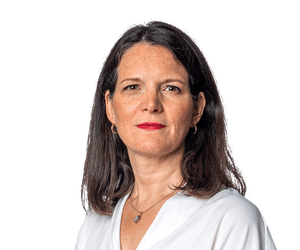
Labour will seek out an “ambitious” youth mobility scheme with the EU, allowing thousands of young Europeans to temporarily live and work in the UK, Rachel Reeves has said.
The chancellor told the Times the scheme would be “good for the economy, good for growth and good for business”, but stopped short of specifying precisely who will be eligible.
A scheme that would allow hundreds of thousands of 18- to 30-year-olds from EU countries to live and work in the UK, and vice versa, has been a key European demand in reaching an economic deal with Britain.
Reeves said the exchange scheme would allow “young people in Britain to be able to go and work, to travel, to volunteer, to gain experience, to learn languages in European countries”.
“And we want young people from those European countries to also be able to come to the UK and have the same opportunities that my generation had to travel, work and study in Europe,” she said.
The chancellor also called on the Office for Budget Responsibility (OBR) to “score both the improved trade relationships that we’ve negotiated and this youth experience scheme” in its economic forecasts.
Reeves’s remarks come in the lead-up to Labour’s annual party conference this weekend, as well as her crunch November budget, in which she faces the prospect of having to find up to £30bn in tax rises or spending cuts.
Despite the bleak financial outlook in the runup to the budget, the chancellor ruled out the option of a wealth tax. “If you look around the world, and countries that do have wealth taxes, they tend not to have other taxes, like inheritance tax and capital gains tax,” she said.
“Those taxes bring in a large amount to the UK Exchequer, and I don’t want to risk the revenues from those with an experiment on something different.”
She also hit back at economic proposals laid out by Andy Burnham, the Labour mayor of Greater Manchester, who has been touted as a potential successor to Keir Starmer.
Burnham said the UK should not be “in hock” to bond markets as he outlined measures that he believed a Labour government should pursue, including a big council housebuilding programme and the nationalisation of utilities paid for with a rise in taxes on the higher paid, a charge on expensive London homes and £40bn of extra borrowing.
Reeves likened the proposals to those espoused by Liz Truss, whose term as prime minister ended after her catastrophic “mini-budget”.
“The government then took a huge gamble, an experiment on the British economy,” Reeves said. “And as a result interest rates went through the roof, mortgage costs went through the roof. Pensions were put in peril. The cost of government borrowing shot up too.”
While admitting she would like to be “less in hock to bond markets”, she added that “the reality is that we rely on those bond markets and those people participating in them to buy our debt”.
Speaking to the Financial Times, Burnham argued that his remarks on bond markets had been “deliberately misinterpreted”. He said: “This is about a long-term approach to regaining stronger public control of essential services, re-establishing a tighter grip on the public finances and reassuring the markets.”
Hackers with pictures and the private information of thousands of nursery children have threatened to publish more information online unless they are paid.
Criminals calling themselves Radiant hacked the UK-based Kido nursery chain and posted profiles of 10 children online on Thursday. Their website on the dark web has posted a “data leakage roadmap” that sets out how the “next steps for us will be to release 30 more profiles of each child and 100 employees’ private data”.
According to a cybersecurity industry briefing seen by the Guardian, Radiant appears to be a new group within cybercrime circles that is “testing the boundaries of morality and depravation”.
The group’s online posts show a proficient command of English but there are indications that they may be non-western, such as a “slight awkwardness” in phrasing, the analysis notes.
It further states that the Radiant gang’s “leak site” – a common ransomware tactic in which a victim’s data is displayed on the dark web – contains 10 Kido customer profiles, which include the child’s name, date of birth, birthplace and details of parents, grandparents and guardians including addresses and phone numbers.
The site also claims to have sensitive data on more than 8,000 children and their families, including accident and safeguarding reports, as well as billing. It says all Kido nurseries in the UK were affected.
The leak site cites attempts to negotiate with Kido and carries a threat to “ruin their entire company as we slowly leak and we urge them to continue our dialog[ue]”.
A Kido spokesperson said: “We recently identified and responded to a cyber incident. We are working with external specialists to investigate and determine what happened in more detail. We swiftly informed both our families and the relevant authorities and continue to liaise closely with them.”
The nursery chain is working with authorities including the Information Commissioner’s Office and Ofsted, and the Metropolitan police is investigating.
An email seen by the Guardian from Kido UK’s chief executive, Catherine Stoneman, said it was treating the incident “with the highest priority”, including engaging independent IT forensic experts in a “complex” and potentially time-consuming investigation. She attributed the breach to “two third-party systems used to process certain data”.
She wrote: “Where we have confirmed that a family’s information has been affected, the family will have already been contacted. If you have not received individual correspondence from us, that means we have no forensic evidence that your data has been impacted.”
Kido, which has 18 sites around London, with more in the US, India and China, told parents the breach happened when criminals accessed their data hosted by a software service called Famly, which is widely used by nurseries to share photos and information with parents.
Anders Laustsen, the chief executive of Famly, said: “We have conducted a thorough investigation of the incident and can confirm that there has been no breach of Famly’s security or infrastructure in any way and no other customers have been affected. We of course take data security and privacy extremely seriously at Famly.”
One woman told the BBC she had received a threatening phone call from the criminals, who said they would post her child’s information online unless she put pressure on Kido to pay a ransom.
Sean, whose child is at a Kido nursery in Tooting, south-west London, told the Guardian that he and all the parents he knew had not heard directly from the nursery that their child’s data had been compromised, though they remained apprehensive. “How have they got details on just certain kids and not everyone – that’s the bit that’s not making loads of sense,” he added.
He viewed the cyber-attack as an inherent risk of using any app, and considered the opportunity to gain real-time information on his child, such as what they had eaten, worth it. Sean said he felt sorry for the nursery staff who were “getting the brunt of complaints”, when it was the app provider that needed to explain itself.
“One of the things that’s obviously horrifying is that whoever the people are, they are sinking to new depths trying to extort money out of a nursery and holding children to ransom,” he said.
The police advise companies against paying hacker ransoms as it fuels the criminal ecosystem as cyber-attacks become increasingly widespread.
The M&S hack deployed ransomware, a tactic popular with Russian-speaking cyber gangs involving software that locks up a target’s IT systems.
The BBC has held conversations through the messaging app Signal and learned that although they spoke fluent English, the criminals said it was not their first language and claimed they hired people to make the calls.
The criminals said: “We do it for money, not for anything other than money. I’m aware we are criminals. This isn’t my first time and will not be my last time.”
They added that they would not be targeting preschools again as the attention had been too great.
Majority of trains under public control by next year, transport secretary to announce
Most rail journeys in Great Britain will be under public ownership by the middle of next year, the transport secretary is expected to announce.
Speaking at the Labour party’s annual party conference, Heidi Alexander will reveal the next four services to be brought into public ownership.
In her speech, Alexander is expected to say:
For too long our railways have been run in the interests of private profit, under a broken system that failed passengers over and over again.
This Labour government is calling time on 30 years of failure, frustration, fragmentation. We are returning our railways to the service of passengers.
In February next year, West Midlands Trains will become the next operator to transfer into public ownership.
And today I can go further, and announce that Govia Thameslink Railway, Chiltern Railways, and Great Western Railway will follow.
We said we would do it in our manifesto – and we are delivering on our promise.
West Midlands Trains services will transfer on 1 February 2026 and Govia Thameslink Railway’s services on 31 May 2026. Chiltern Railways and Great Western Railways(GWR) services will then be the next to transfer.
Transport secretary Heidi Alexander will announce the next four rail services, including Govia Thameslink Railway to be brought into public ownership. Photograph: Jonathan Brady/PA
Govia Thameslink is the largest train operator in the country, meaning that by the middle of next year eight in ten services will be run by the public, for the public, say Labour.
Legislation to establish Great British Railways, the new organisation which will take responsibility for the day-to-day operations of the railways, will be introduced before the end of the year, the party has said.
More on this story in a moment, but first, here is what else is on the schedule today:
Morning: Children and families minister Josh MacAlister is on the morning media round.
11.30am:Keir Starmer will make a visit in central Liverpool as he heads to the city for his party’s conference.
12pm:Palestine Solidarity Campaign protest expected outside Labour party conference.
3.20pm: Chancellor Rachel Reeves will visit Southport.
Saturday: Close of constituency Labour party (CLP) and affiliate nominations for Labour deputy leadership candidates.
And some of the other recent developments in UK politics:
Keir Starmer will warn the Labour party that it is in a “fight for the soul of the nation” and that history will not forgive his government if it fails to confront and defeat Reform UK and the populist right. Speaking to the Guardian ahead of a vital conference for his leadership, he said he would tell disgruntled party members that now was “not the time for introspection” and infighting.
Starmer’s plan for digital IDs risks creating “an enormous hacking target”, a cybersecurity expert has warned, as technology companies prepared to bid for contracts that could run into billions of pounds. Amid widespread opposition, the prime minister said the mandatory digital ID – including citizens’ photos, names, dates of birth, nationalities and residency status – would come into use by July 2029. A petition calling for the government not to introduce digital ID cards had received more than 1.5 million signatures by Saturday morning.
Labour has restored the party whip John McDonnell and Apsana Begum 14 months after they lost it for rebelling over the two-child benefit cap, the Guardian understands. The pair had the whip reinstated after a conversation on Friday with Jonathan Reynolds, who became Labour’s chief whip in a reshuffle earlier this month.
Fears are growing that shared houses may become the focus of anti-migrant protests, with residents and charities saying tensions are building in some areas. Homes of multiple occupation (HMOs) have grown in number as renters seek affordable accommodation amid a housing crisis. Reform UK politicians, including George Finch, the teenage leader of Warwickshire county council, have criticised the use of HMOs to house asylum seekers.
Key events
Labour party chair Anna Turley has told the PA news agency she did not think “anyone would deny” that her party has had “quite a challenging couple of weeks” amid calls for Andy Burnham to challenge the prime minister.
But she insisted that many more MPs are “frustrated” that their colleagues are already trying to topple Starmer.
Keir Starmer to warn Labour that battle with Reform is ‘fight for soul of the nation’
Pippa Crerar
Keir Starmer will warn the Labour party that it is in a “fight for the soul of the nation” and that history will not forgive his government if it fails to confront and defeat Reform UK and the populist right.
Speaking to the Guardian ahead of a vital conference for his leadership, he said he would tell disgruntled party members that now was “not the time for introspection” and infighting.
His remarks are likely be seen as a veiled dig at Andy Burnham, the mayor of Greater Manchester, who has been touted by some as a potential successor.
Keir Starmer said he would tell disgruntled party members that now was ‘not the time for introspection’ and infighting. Photograph: Dinendra Haria/SOPA Images/Shutterstock
The prime minister heads to Liverpool after a rocky few weeks marked by missteps and departures, and with Labour lagging 10 points behind Reform in the polls.
In his interview, Starmer urged his party to recognise the scale of the challenge ahead.
He said:
I have to say to all of those attending conference, this is a real opportunity for us to make our argument about patriotic national renewal, to own patriotism, to define it for what it is.
History will not forgive us if we do not use every ounce of our energy to fight Reform. There is an enemy. There is a project which is detrimental to our country. It actually goes against the grain of our history. It’s right there in plain sight in front of us. We have to win this battle.
While Starmer’s focus will be on setting out his own vision for renewing the country, he will also urge Labour not to be distracted by speculation over his grip on power.
Majority of trains under public control by next year, transport secretary to announce
Most rail journeys in Great Britain will be under public ownership by the middle of next year, the transport secretary is expected to announce.
Speaking at the Labour party’s annual party conference, Heidi Alexander will reveal the next four services to be brought into public ownership.
In her speech, Alexander is expected to say:
For too long our railways have been run in the interests of private profit, under a broken system that failed passengers over and over again.
This Labour government is calling time on 30 years of failure, frustration, fragmentation. We are returning our railways to the service of passengers.
In February next year, West Midlands Trains will become the next operator to transfer into public ownership.
And today I can go further, and announce that Govia Thameslink Railway, Chiltern Railways, and Great Western Railway will follow.
We said we would do it in our manifesto – and we are delivering on our promise.
West Midlands Trains services will transfer on 1 February 2026 and Govia Thameslink Railway’s services on 31 May 2026. Chiltern Railways and Great Western Railways(GWR) services will then be the next to transfer.
Transport secretary Heidi Alexander will announce the next four rail services, including Govia Thameslink Railway to be brought into public ownership. Photograph: Jonathan Brady/PA
Govia Thameslink is the largest train operator in the country, meaning that by the middle of next year eight in ten services will be run by the public, for the public, say Labour.
Legislation to establish Great British Railways, the new organisation which will take responsibility for the day-to-day operations of the railways, will be introduced before the end of the year, the party has said.
More on this story in a moment, but first, here is what else is on the schedule today:
Morning: Children and families minister Josh MacAlister is on the morning media round.
11.30am:Keir Starmer will make a visit in central Liverpool as he heads to the city for his party’s conference.
12pm:Palestine Solidarity Campaign protest expected outside Labour party conference.
3.20pm: Chancellor Rachel Reeves will visit Southport.
Saturday: Close of constituency Labour party (CLP) and affiliate nominations for Labour deputy leadership candidates.
And some of the other recent developments in UK politics:
Keir Starmer will warn the Labour party that it is in a “fight for the soul of the nation” and that history will not forgive his government if it fails to confront and defeat Reform UK and the populist right. Speaking to the Guardian ahead of a vital conference for his leadership, he said he would tell disgruntled party members that now was “not the time for introspection” and infighting.
Starmer’s plan for digital IDs risks creating “an enormous hacking target”, a cybersecurity expert has warned, as technology companies prepared to bid for contracts that could run into billions of pounds. Amid widespread opposition, the prime minister said the mandatory digital ID – including citizens’ photos, names, dates of birth, nationalities and residency status – would come into use by July 2029. A petition calling for the government not to introduce digital ID cards had received more than 1.5 million signatures by Saturday morning.
Labour has restored the party whip John McDonnell and Apsana Begum 14 months after they lost it for rebelling over the two-child benefit cap, the Guardian understands. The pair had the whip reinstated after a conversation on Friday with Jonathan Reynolds, who became Labour’s chief whip in a reshuffle earlier this month.
Fears are growing that shared houses may become the focus of anti-migrant protests, with residents and charities saying tensions are building in some areas. Homes of multiple occupation (HMOs) have grown in number as renters seek affordable accommodation amid a housing crisis. Reform UK politicians, including George Finch, the teenage leader of Warwickshire county council, have criticised the use of HMOs to house asylum seekers.
Two people have died while trying to cross the Channel to Britain, French authorities said.
The incident occurred south of the beaches of Neufchâtel-Hardelot, when about 100 people were trying to get to the UK on a makeshift boat. French authorities said about 60 others attempting the crossing had been rescued.
About 60 people were currently being taken care of, said Isabelle Fradin-Thirode, an official in nearby Montreuil-sur-Mer.
The incident brings the number of Channel crossing deaths to at least 25 this year, according to an Agence-France Presse tally based on official data.
Since January, a record 31,000 people have arrived in Britain by crossing the Channel in small boats.
Under a recent Franco-British scheme, the UK can return them after arrival if they are deemed ineligible for asylum, including those who have passed through a “safe country” to reach UK shores. In return, London will accept an equal number of people from France who are likely to have their asylum claims granted.
Two humpback whales, a mother and her calf, were entangled in a shark net off Queensland’s Rainbow Beach on Saturday, prompting urgent calls to rescue officials from members of the public.
The state’s Department of Primary Industries (DPI) said it heard reports of the entanglements just before 6am and members with the agency’s shark control program and marine animal release team (MART) were on the scene at Rainbow Beach, about 245km north of Brisbane, around 10.30am to start work on freeing the animals.
Pauline Jacob, the deputy director for general fisheries and forestry for the DPI, said rescue work was still ongoing on Saturday afternoon.
Jacob urged the public to call in experts during any incident involving wildlife stuck in shark netting but to avoid attempts to release any animals themselves.
“While our contractor was monitoring the situation and waiting for the MART team to arrive, interference from two scuba divers unfortunately made the entanglement worse,” Jacob said.
“We remind the public that, for their own safety and the safety of all involved, it is dangerous to approach or try to release whales trapped in nets.
The Queensland Department of Primary Industries said it heard reports of the entanglements just before 6am. Photograph: Erin Kirwood/Envoy Foundation
“Our teams are the trained experts and we urge members of the public to please stay away from the nets.”
The mother and calf were among nine whale entanglements in nine days, part of a devastating spate of incidents involving humpbacks as they migrate south after the breeding season, according to the Envoy Foundation, a conservation group that was on the scene on Saturday with a drone to document the situation.
The Envoy Foundation’s co-founder Andre Borell said the entanglements were “unconscionable”, particularly after a recent report by KPMG into shark control measures recommended the Queensland government trial removing shark nets during whale migration season from April to October.
“The science doesn’t support that these devices work, so let’s stop pretending that this is about the environment and let’s start admitting that this is about politics,” Borell said.
The Queensland government said earlier this year it would pour more money into its shark control management plan between 2025 and 2029 to put “swimmer safety first”.
Borell said any entanglement, even if it has a “fairytale ending” with the animals being freed, can be extremely stressful for the whales.
“When you consider the scale of their annual migration from Antarctica all the way up here, to have their babies, nurse their calves and then go all the way back … every ounce of energy is important,” he said. “And these entanglements obviously burn a lot of that energy, they create a lot of that stress.”
There are 27 shark nets in Queensland and 51 in New South Wales.
The NSW state government had planned to trial a removal of some shark nets from three beaches in Sydney and Central Coast, but it paused that plan earlier this month after a fatal shark incident on Sydney’s northern beaches.
Whale mothers and their calves are particularly vulnerable to shark netting as they spend larger amounts of time near the shore as they head south, risking entanglement. Dr Vanessa Pirotta, a whale scientist, told Guardian Australia earlier this month during a separate entanglement that adults appear to be aware of the danger the nets pose.
“But the calves obviously don’t know and get entangled,” she said. “Then the mums freak out and stay nearby, then they are getting entangled as well.”
In more bad news for marine life, a report released by South Australia’s environment department this week found the deaths of three great white sharks were linked to the state’s ongoing algal bloom.
Scientists conducted necropsies on the carcasses of nine white sharks found dead on the state’s beaches. The results showed three of those sharks had physical symptoms, including inflamed gills, consistent with a cause of death related to exposure to high levels of the algae Karenia spp.
Mike Steer, the executive director of the South Australian Research and Development Institute, said many creatures affected by the bloom were “suffocating”.
“The algae effectively impact the gills and prevent the animal from breathing appropriately,” Steer told a news briefing on the shark deaths on Friday.
“The other thing that the bloom can do is, once it decomposes in an area, it can draw the oxygen out of the water as well. So it creates additional pressure for those marine organisms that rely on gill respiration to breathe appropriately … they effectively get suffocated.”
Wes Streeting, the UK health secretary, was in a government car heading back into central London from a flag-raising to mark the UK’s recognition of Palestine when he saw the news. “He was aghast,” an aide said. Streeting was reading on his phone that Donald Trump had just warned women not to take Tylenol – known outside the US as paracetamol – during pregnancy.
The US president had alleged without evidence that the common painkiller caused autism in children. “Don’t take Tylenol,” Trump said about a drug also known as acetaminophen.
The British government has been criticised for tiptoeing around Trump on all manner of issues. But not, it seems, on this. Streeting decided to devise a plan to limit the fallout in the UK and reassure mothers-to-be that taking paracetamol was safe. He decided to rebut – publicly and vigorously – what Trump had said.
Already booked to appear on a breakfast show the next morning, Streeting knew he would be asked about Trump. “He knew he had to be unequivocal,” the aide said. “That whatever diplomatic issues we face, first and foremost our responsibility is people’s health.”
‘Listen to doctors, scientists’
When the question came, Streeting was brutal. “I trust doctors over President Trump, frankly, on this,” he said. “I’ve just got to be really clear about this: there is no evidence to link the use of paracetamol by pregnant women to autism in their children. None.
“So I would just say to people watching: don’t pay any attention whatsoever to what Donald Trump says about medicine. In fact, don’t even take my word for it, as a politician – listen to British doctors, British scientists, the NHS.”
Wes Streeting. Photograph: Jordan Pettitt/PA
His headline-making response to Trump’s baseless claim was complemented by a “flood the airwaves” strategy that he and his Department of Health and Social Care (DHSC) had begun putting in place the day before.
Senior figures from bodies such as the Medicines and Healthcare products Regulatory Agency, which regulates medicines, NHS England, the Royal College of GPs, the Royal Pharmaceutical Society and the UK Health Security Agency conveyed similar messages to Streeting’s in media interviews throughout Tuesday.
The National Autistic Society criticised “the incessant misinformation about autism from President Trump and [the US health secretary] Robert F Kennedy Jr”, which it said would undermine decades of research and leave autistic people “dismayed and frightened”.
In addition, DHSC officials gave doctors and influencers with large followings on social media factsheets and briefings on paracetamol and pregnancy to help ensure they got accurate, well-evidenced information out on platforms such as X, TikTok and Instagram.
Recent months have brought several high-profile examples of untruths about medicine and such misinformation is causing growing alarm in the global health community.
In June, cancer doctors revealed their horror that some patients were shunning established treatments for the disease and instead opting for untested quack regimes such as coffee enemas and raw juice diets.
The truth behind Trump’s claims about autism and paracetamol, or Tylenol – video
Days later, the BBC disclosed how Paloma Shemirani, the daughter of a nurse turned anti-vaxxer, Kate Shemirani, had died after rejecting chemotherapy for non-Hodgkin lymphoma. The 23-year-old had chosen to use Gerson therapy, an unproven treatment for cancer, instead.
And this month in an appearance on the main stage at Reform UK’s conference, the cardiologist claimed that King Charles and the Princess of Wales’s cancer diagnoses were linked to them having had the Covid vaccine.
But experts who study health misinformation see Trump’s remarks as a worrying new low.
Helen Bedford, a professor of child health at University College London (UCL), said: “I was horrified, because it’s not evidence-based and he is the most powerful man in the world. It was shocking because you know the impact it’s going to have, not just on pregnant women but also because it implies that autism is something to be avoided. It was a horrifying announcement, damaging and dangerous.”
Dr Susanna Kola-Palmer, a psychologist at the University of Huddersfield, said: “People are prone to authority bias, trusting and believing what someone in authority says just because they are an authority figure, not necessarily because they are right. Donald Trump, as the US president, is a powerful public figure and therefore lots of people will accept what he says without questioning it.
“When health misinformation is being peddled so publicly by such a powerful person, it is both deeply troubling and dangerous, as it risks eroding public trust in science and compromising public health.”
Health experts fear Trump linking acetaminophen to autism could dissuade pregnant women – who already have few medicines available if they fall sick – from using it and in turn lead to illnesses such as pain or a fever going untreated and harming them or their unborn child.
Pharmacists in the UK report that Trump’s remarks may already be influencing some people’s decisions about their health. In a survey of 500 pharmacies, 24% said they had encountered patients this week who were questioning paracetamol’s safety.
“These are alarming findings which show that comments made in the US are having a direct impact on patients in the UK and potentially deterring some from taking what are proven and safe medical treatments,” said Olivier Picard, the chair of the National Pharmacy Association.
‘Fringe narratives’
Writing in the Lancet medical journal in July, Heidi Larson, a professor of anthropology at the London School of Hygiene & Tropical Medicine, identified the US as the origin of so much of the “pandemic of misinformation” and “fringe narratives” that caused controversy during the Covid pandemic and appear to have gained even more traction since.
For example, from 2019to 2021 the US acted as “a major exporter of Covid-19 vaccine misinformation, with American accounts disproportionately represented as central hubs in global misinformation networks”, she said. That influenced behaviour in countries as far away as Nigeria, Ghana and Bulgaria, contributing to reduced uptake of Covid and childhood vaccines.
As a result, organisations such as the WHO and Gavi, the vaccines alliance, in their day-to-day work promoting vaccines “are increasingly confronted by vaccine hesitancy grounded in exported disinformation, much of it directly traceable to American political discourse and media,” Larson said.
Concerted efforts to undermine vaccines are rising despite the WHO’s estimate that vaccines have saved 154 million lives since 1974 – 101 million of them children – and in an era of rapid progress in medical science when new vaccines appear to offer promise on diseases for which until recently they were not used.
So how can the growing threat misinformation poses to health worldwide be tackled?
A vaccination station in Kampala, Uganda. The WHO estimates vaccines have saved 154 million lives since 1974. Photograph: Hajarah Nalwadda/Getty Images
There is no obvious way to stop the authoritarian Trump and Kennedy promoting wild theories about health despite a lack of evidence. But experts say new approaches in response are needed, especially with big tech firms whose social media platforms spread so much of the scaremongering. There is a consensus that simply relying on conveying accurate information via leaflets and websites is not enough.
“While messages from Wes Streeting and professional organisations are very helpful, evidence shows that what matters to the public is the individual conversations they have with health professionals,” Bedford said, citing the many questions a parent may have before their child starts their schedule of vaccinations. “Most people trust health professionals and want to talk to them when they have concerns and questions. That can be very powerful and very influential.”
But she noted that the UK has a shortage of many types of health professionals – health visitor numbers have fallen sharply since 2015 – so how such informative and potentially reassuring conversations would happen was not obvious. A different mindset among clinicians and a bigger health workforce were needed to enable such a shift to pro-active, pre-treatment appointments, she said.
Paracetamol on sale in the UK. Pharmacists report that Trump’s remarks may already be influencing some people in the UK’s decisions about their health. Photograph: Andy Rain/EPA
Chris van Tulleken, an NHS infectious diseases doctor and global health expert at UCL, cautioned that clinicians having such conversations should not automatically disregard the views of patients who may have suspicious, even conspiratorial views about big pharma, given some of its products have caused major harm.
“We have to meet people where they are. If you just tweet with the hashtag ‘vaccines work’, which some people do, the difficulty is that there are some vaccines with serious side-effects. I run a clinic where we’re cautious about certain vaccines,” he said.
Last year the WHO agreed a partnership with TikTok involving factchecking and the social media company doing more to remove content that could endanger health.
The WHO’s Fides network brings together more than 1,000 health professionals who are active on social media “to amplify trustworthy content and push back against harmful misinformation”, said Dr Alex Ruani, one of those involved. “It’s essentially a ‘trusted voices’ network.” For instance, Dr Mikhail “Mike” Varshavski, one of those voices, has more than 29 million followers on social media.
Ruani said social media platforms needed to do much more. “Big tech already know how to downrank, demote, deamplify or quarantine content. These processes can and should be applied to high-risk content [about health],” she said.
“We need better risk flags and warnings at the point of exposure, a bit like how you get pop-ups for cookies or how spam filters work in email. These friction nudges can be built into browsers or apps to give people a heads-up about dodgy content before they consume or share it.”
Nunzia Caputo was five years old when her grandmother put a stop to her playing on the street outside their home in Bari and summoned her to help make orecchiette, the ear-shaped pasta believed to have originated in the southern Italian port city, to be sold to passersby.
“I used to go out to play every afternoon with my friend Giulia,” said Caputo, now 67. “But then, on a whim, my grandmother said I wasn’t allowed to do that any more. She told me: ‘From now on, you must learn how to make orecchiette.’ I started to cry.”
There were more tears as Caputo was taken to task over her first sub-par attempts. But before long she was skilfully turning chunks of semolina dough into thin, snake-like rolls, cutting off small pieces of the end and nimbly using her thumb to create the distinctive, concave shape.
Since then, she has not stopped. Caputo is the most well-known of Bari’s so-called pasta grannies, a small group of women who from the doorsteps of their homes along Via dell’Arco Basso, a cobbled alleyway in the heart of the city’s old town, make and sell all day, every day.
The historic street’s irresistible blend of the grannies, homemade pasta and fresh laundry billowing from balconies has been a major pull for tourists, catapulting the area – once a no-go zone because muggings were rife – to worldwide fame and bringing prosperity to the women and city.
But with the meteoric success have come pitfalls. The neighbourhood was rocked in August when plainclothes police officers showed up and confiscated stacks of orecchiette and pasta-making equipment amid allegations that some of the women were sourcing commercially produced pasta and passing it off as their own. Some were also accused of flouting food safety standards and fiscal rules.
Three of the women were fined €5,000 (nearly £4,400) for fraudulent commercial activities. Infuriated by the raids, the grannies downed tools and barricaded entrances to the street in a show of resistance.
The raid was part of an investigation launched by Bari prosecutors last year and still ongoing to establish whether there is any truth to accusations revolving around factory-made orecchiette.
Doubts over the pasta’s authenticity have lingered for years but became more prominent as a result of Bari’s post-pandemic boom in tourism, especially from cruise ships docking in the city’s port.
Local journalists probed while some tourists, suspecting they were being ripped off, shared videos on social media. Some of the women are alleged to have bought packets of industrial orecchiette and emptied the contents into clear plastic bags before selling them as their own.
Authorities said the most conspicuous evidence was piles of cardboard boxes for factory-made pasta found dumped in wheelie bins on the outskirts of the old town.
Caputo, who offers orecchiette masterclasses and travels the world to promote the pasta’s tradition, counts the British chef Jamie Oliver among her celebrity friends and says she will always cherish her encounter with the late Pope Francis, to whom she gave a packet of her produce. Photos taken with various visiting politicians, including a former prime minister, Giuseppe Conte, adorn her walls.
She was not among the women fined but said she felt “terrified” by the police blitz, as if the women had been hoarding “guns or drugs” instead of innocently making pasta.
The pasta grannies came together in a show of solidarity after the raids but otherwise rivalries rumble beneath the surface. Most are tight-lipped about the investigation but one pasta maker freely admitted to cutting corners and selling the industrial stuff. “Yes, I was fined,” she said, declining to reveal her name. “But what else was I supposed to do? Demand was such that I couldn’t keep up.”
She said it was impossible for the women to cater to all the tourists. “Look at them all gawping and taking photos as if I’m a relic in a museum. It never used to be this way.”
Pietro Petruzzelli, a city councillor, said the council supported the tradition but “what they can’t do is sell industrial pasta. Our position is one of respect for the rules. So now we’re going through a process of ensuring they’re all compliant.”
The grannies’ woes may be far from over. Gaetano Campolo, the chief executive of Home Restaurant Hotel, which connects food enthusiasts with home chefs and hosts, made the legal complaint that triggered the investigation and is determined that prosecutors see it through. He criticised Bari council for trying to make a tourist attraction out of something he claimed had “no legal basis”.
“It’s a dangerous operation that betrays honest, law-abiding citizens,” he alleged.
But Caputo, who is preparing to travel to Singapore to promote orecchiette, brushed the investigation off. “I feel beleaguered by all of this,” she said, “but I will not stop doing this work.”
King Charles III and Queen Camilla will make a state visit to meet Pope Leo XIV for the first time at the Vatican next month, Buckingham Palace has said.
The trip in late October will come about six months after the royal couple visited Leo’s predecessor, Pope Francis, shortly before his death in April.
During the coming trip Charles – head of the Church of England – and Camilla would join Leo in celebrations to mark the current jubilee year, held every 25 years, the palace statement said.
“The visit will also celebrate the ecumenical work by the Church of England and the Catholic church, reflecting the jubilee year’s theme of walking together as ‘pilgrims of hope’,” it added.
The royal couple’s state visit to the Holy See will make a trip they had been forced to cancel in April because of Francis’s failing health. They were able to see the pontiff for a private meeting, becoming one of the final dignitaries to see him before his death at 88 a couple of weeks later. Charles, 76, and Francis shared a passion for protecting the environment.
Francis died after 12 years as head of the world’s 1.4 billion Catholics, and Leo was elected in a conclave of cardinals in May. Leo, 70, who has a history of missionary work in Peru, is the first pope from the US.
The royal couple’s four-day trip to Italy in April had been thrown into doubt by the king’s own health scare. Charles was briefly admitted to hospital on 27 March after experiencing temporary side effects from the treatment for his cancer, which was announced last year.
The king had previously visited the Vatican on five occasions as Prince of Wales, and has met three popes.
He was received by Francis during visits to the Vatican in 2017 and 2019, and by Benedict XVI in 2009. He met John Paul II during his visit to Britain in 1982 and attended the Polish pope’s funeral at the Vatican in 2005.
As Church of England head, King Charles leads the mother church of global Anglicanism. The church was established in the 16th century by Henry VIII, the king who broke with the Vatican over its refusal to annul his marriage to Catherine of Aragon.
The split fuelled centuries of ensuing conflict, but in modern times relations between the Catholic church and the Church of England – often referred to as the Anglican church – have been amicable.
A tourist has died after her walking group faced sudden extreme weather conditions at Cradle Mountain national park in Tasmania on Friday.
Police on Saturday confirmed that one woman among the group of four Chinese nationals visiting the state had died but said the other three were in good condition.
The group had ventured to the national park on Friday, where another walking group later found them in difficulty and suffering from the cold.
The other walking party called emergency services about 3.30pm on Friday, but the weather prevented a rescue crew from reaching the group until later in the afternoon.
Rescuers with police search and rescue, the SES, the parks and wildlife service and Ambulance Tasmania were ultimately able to reach the party and camped with them overnight before they walked out of the area on Saturday morning.
Tasmania police inspector Steve Jones said it was a “tragic outcome” for the group of visitors, adding that the state’s weather can change “very quickly, particularly in the alpine areas”.
“Unfortunately, they were not prepared for bushwalking and found themselves overwhelmed by the extreme weather conditions,” Jones said.
“The group did not have appropriate equipment, including a personal locator beacon, and were unable to call for assistance when they first realised they needed help.
“Fortunately, another group of walkers found them and rendered valuable assistance with the limited supplies they had.”
Jones said that extreme weather conditions delayed assistance as rescue officials weren’t able to deploy a helicopter to reach the party and it took time for ground search and rescue teams to reach them.
Multiple news reports have identified the three men shot at a US Immigration and Customs Enforcement (Ice) facility in Dallas on Wednesday.
Miguel Angel García-Hernandez of Mexico, Jose Andres Bordones-Molina of Venezuela and Norlan Guzman-Fuentes of El Salvador were shot in what the FBI has described as a “targeted attack” on Ice by the 29-year-old alleged shooter, Joshua Jahn, CNN reported.
While several outlets, including the New York Times and Univision, reported that Garcia-Hernandez was among the injured, the federal government has not publicly confirmed this. The New York Times said Bordones-Molina was the second injured detainee, while Guzman-Fuentes was fatally shot.
García-Hernandez, who grew up in Arlington and was originally from San Luis Potosí, Mexico, was shot three to four times during the attack, his brother, who asked not to be identified because he is in immigration proceedings and has not yet obtained legal status, told the news outlets about the father of four.
“He’s in very serious condition in the hospital. He’s very bad,” his brother told Univision. “He’s already had two operations.”
A video filmed from inside the building shows detainees running while handcuffed and their legs shackled, some falling to the ground amid the rush to evade the gunfire.
García-Hernandez, who is undocumented, is a house painter who has been living in the US for about 20 years, the New York Times reported, and his mother was deported about two months ago.
“What we want is for them to help my mother so she can come see [García-Hernandez] because she was also deported unjustly,” said García-Hernandez’s brother to Univision. García-Hernandez’s brother and partner are seeking legal advice on possible actions they can take after the incident. As García-Hernandez was the family’s main support, they have launched a GoFundMe campaign to help cover expenses, including those for a baby on the way.
Meanwhile, Bordones-Molina was also undocumented and had a prior legal record, including a traffic violation and a property-related offense, according to CNN.
Guzman-Fuentes, the third shooting victim, had been previously arrested “for battery, improper exhibit of a firearm or dangerous weapon, criminal mischief, driving while intoxicated, and aggravated assault with a deadly weapon”, a source told CNN.
Authorities said the shooter had not intended to harm detainees, according to notes he wrote. After the detainees were shot, Jahn, of Fairview, Texas, died of a self-inflicted gunshot wound.
“Notably, these loose notes included a game plan of the attack and target areas at the facility,” Nancy Larson, acting US attorney for the northern district of Texas, said on Thursday. “He called the Ice employees ‘people showing up to collect a dirty paycheck.’”
The incident has escalated tensions in the White House, with Donald Trump blaming the shooting on “Radical Left Terrorists” and the Democratic party, although there is no official evidence of any affiliations, party politics or motives of the suspect.